⚠️ Notice: research compound for laboratory use only. Not for human or veterinary consumption, diagnosis or treatment. Sold to adults 18+ only.
NAD+ is neither a peptide nor an experimental molecule — it is one of the basic building blocks of metabolism. What makes it interesting for research is that its availability inside the cell shifts over a lifetime: by middle age it has fallen to roughly half, a decline that overlaps with deteriorating mitochondrial function and an accumulation of unrepaired DNA damage.
Where NAD+ comes into play
- Cellular respiration — it accepts electrons in glycolysis, the Krebs cycle and beta-oxidation, then as NADH hands them to the respiratory chain for ATP production.
- Sirtuins (SIRT1–7) — NAD+-dependent deacetylases governing gene expression, mitochondrial biogenesis, DNA repair and stress responses. Without NAD+ they simply do not work.
- PARP enzymes — they consume NAD+ when detecting DNA breaks; in oxidative and UV damage models that consumption is a research topic in its own right.
- CD38 and SARM1 — enzymes that degrade NAD+ instead; studied in the context of inflammation and axonal degeneration.
Direct NAD+ versus the precursors NMN and NR
Precursors only reach NAD+ through enzymatic conversion along the salvage pathway (NMNAT and NRK respectively). For in vitro work, direct NAD+ is therefore the more precise tool — you set the concentration in the medium yourself, with no variable in the form of conversion efficiency. For in vivo models researchers generally reach for precursors instead, for their better bioavailability.
Specifications
| Name | Nicotinamide adenine dinucleotide (oxidised form) |
| CAS | 53-84-9 |
| Formula | C₂₁H₂₇N₇O₁₄P₂ (663.43 Da) |
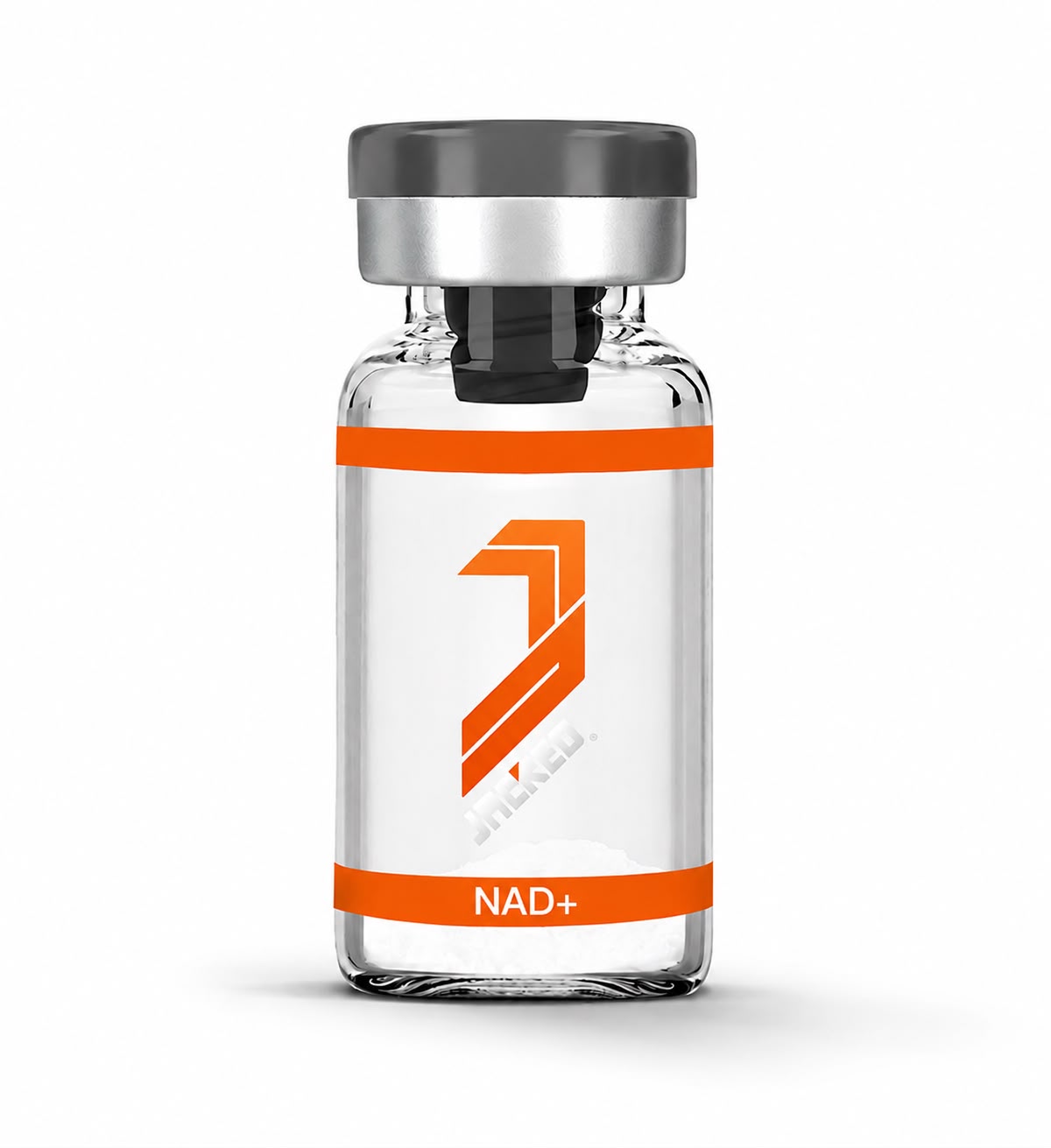
| Content | 500 mg / vial |
| Form | Lyophilised powder |
| Purity | ≥ 98% (HPLC) |
| Intended use | Preclinical and laboratory research, 18+ |
Storage and reconstitution
Keep the lyophilisate at −20 °C, protected from light and moisture. Dissolve in deionised water or PBS at pH 7.4 — NAD+ is prone to hydrolysis at higher pH, so do not take it above 7.4. Store the solution at 2–8 °C and use within 7 days; for longer storage, −80 °C.
NAD+ in this form is not a medicine, a food supplement or a cosmetic product, and is not approved by any regulatory body for human use. The seller accepts no liability for use contrary to these terms.